You have the option to restrict the display of the ControlUp Real-Time DX Console ControlUp Real-Time DX Console user interface components by using the Microsoft Group Policy. You can hide panes, views, actions, columns, and buttons, thus creating a limited view that might be useful for delegated administrators, such as helpdesk personnel. These restrictions are visual only in terms of what is visible in the console. They do not change any permissions the user might have to perform actions in ControlUp.
Usage
Download the administrative templates ZIP file from here and extract both the ControlUpConsole2020.admx and ControlUpConsole2020.adml files to your policy definition folder.
For a detailed explanation on Group Policy Templates, see the official Microsoft documentation.
After importing the template, your policy should appear like the following image:
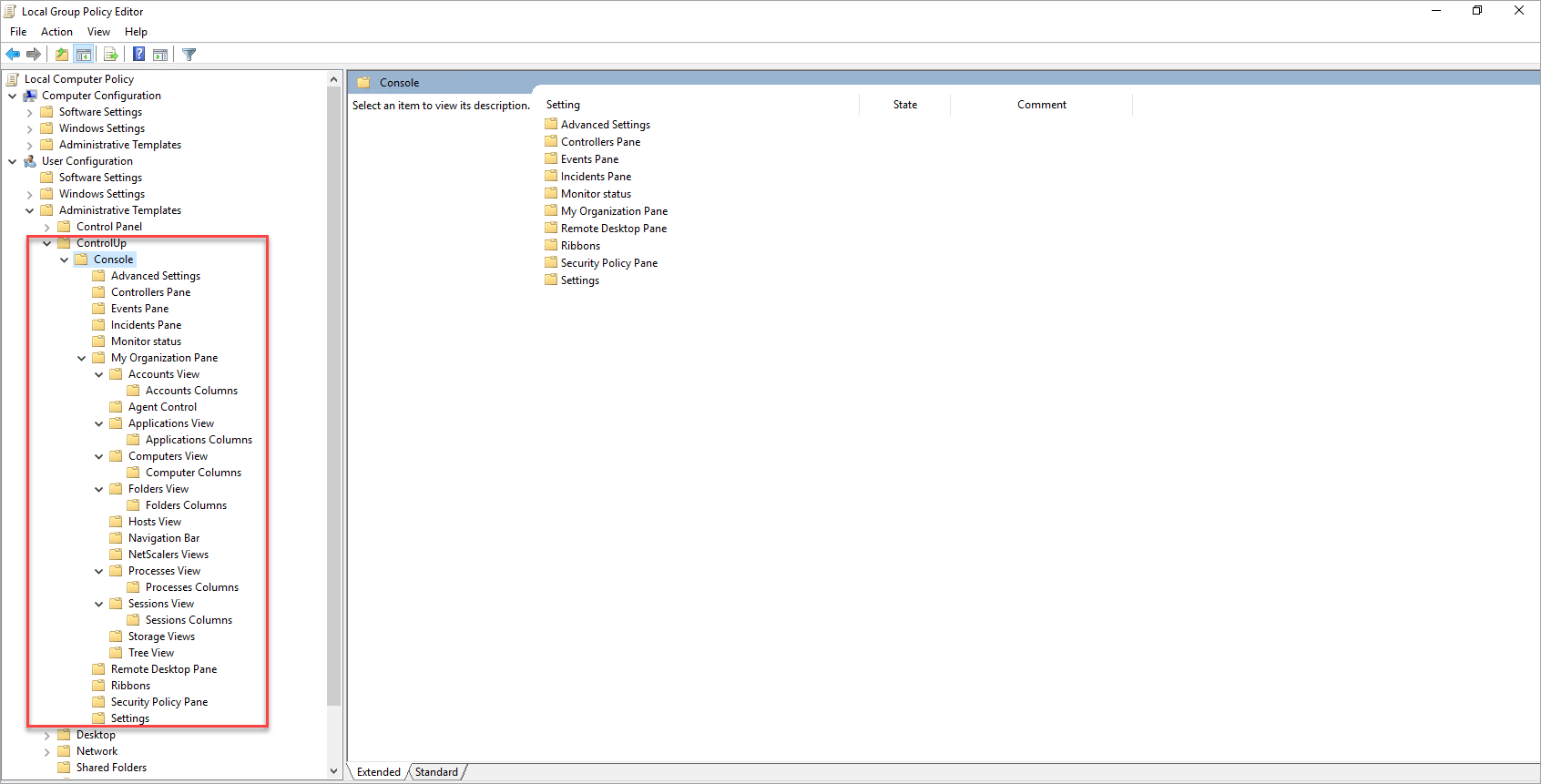
The policies are applied to users. Use the policy template in GPOs linked to Active Directory OUs where your delegated ControlUp administrator user accounts are located.
Under ControlUp > Console in the policy, there is a subfolder for each pane, view, ribbons, and settings window. The policy names are sorted alphabetically.
You can use the template to hide the following user interface components:
Advanced Settings
- Disable process flat views
- Prevent automatic agent deployment
- Regulate information updates
- Search box behavior
Controllers Pane
The Controllers Pane can hide the entire pane or individual controllers.
Machines: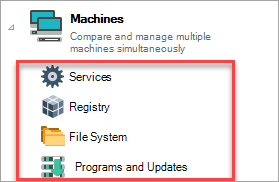
- Services
- Registry
- File System
- Programs and Updates
Users:
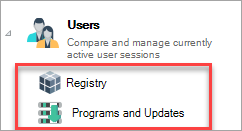
- Registry controller
- User Registry
Enterprise:
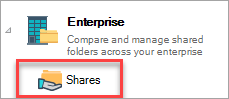
Shares
Events Pane, Incidents Pane, Monitor status view
You can hide the entire pane or view.
My Organization Pane
You can’t hide My Organization Pane. As the default view of ControlUp, it contains the majority of the policies.
Accounts view
- You can hide the Accounts view
- In the Accounts columns subfolder, you can hide each available column:
- Machines
- CPU
- Memory (Private Bytes)
- Name
- Page Faults/sec
- Processes
- Sessions
- Stress Level
Agent Control
You can hide any of the actions that you can perform on ControlUp Agents:
- Agent Control
- Properties context menu
- Restart Remote Agent
- Set Listening Port
- Start Remote Agent
- Stop Remote Agent
- Uninstall Remote Agent
- Upgrade/Install Remote Agent
Machines View
- You can't hide the Machines view
- In the Machines columns subfolder, you can hide each available column.
- You can hide the following actions:
- Abort Shutdown
- Admin$ Diagnostics Instruction
- Disable Process Execution
- Enable Process Execution
- Launch Event Viewer On Remote Computer
- Flush DNS
- Import Registry Computer
- NSLookup Diagnostics Instruction
- Ping Diagnostics Instruction
- Reboot machine
- Refresh Machine Policy
- Send Message (same as in sessions view)
- Send Super Message (same as in sessions view)
- Send Wake On Lan Signal
- Shutdown machine
- Run As User
- Test WMI Diagnostics Instruction
- Trace Diagnostics Instruction
- Wake On Lan
- XenDesktop site management >> Enable Maintenance Mode
- XenDesktop site management >> Disable Maintenance Mode
Applications view
- You can hide the Applications view
- In the Applications columns subfolder, you can hide each available column.
Folders view
- You can hide the Folders view
- In the Folders columnssubfolder, you can hide each available column:
- Avg Sessions per Machine
- Machines CPU
- Machines
- Connected Machines
- Critical Stressed Machines
- Critical Stressed Processes
- Critical Stressed Sessions
- Description
- Disconnected Machines
- Folders Path
- High Stressed Machines
- High Stressed Processes
- High Stressed Sessions
- Low Stressed Machines
- Low Stressed Processes
- Low Stressed Sessions
- Max Sessions per Machine
- Mid Stressed Machines
- Mid Stressed Processes
- Mid Stressed Sessions
- Min Sessions per Machine
- Name
- Page Faults/sec
- Processes
- Sessions
- Stress Level
- User Sessions
Process view
- You can hide the Process view
- In the Process columns subfolder, you can hide each available column.
- You can hide the following actions:
- End Process
- Go To >> Session
- Kill Process
- PsKill
- Set Process Priority
Session view
- You can hide the Sessions view
- In the Session columns subfolder, you can hide each available column.
- You can hide the following actions:
- Chat
- Disconnect Session
- Get Session Screenshot With Approval
- Get Session Screenshot With Notification
- Get Session Screenshot Without notifying the user
- Go To >> Machine
- Import registry user
- Logoff session
- Reapply group policy
- Refresh user group policy
- Remote assistance
- Kill policy
- Send message (same as in Machines view)
- Send super message (same as in Machines view)
Remote Desktop pane
You can hide the all Remote Desktop actions from the console.
Ribbons
Home
You can hide the following options from the Home ribbon:
Buttons:
- Add Cloud Connection
- Add Machines
- Add EUC Environment
- Add Hypervisor
- Add Monitor
- Add App. Delivery Controller (ADC)
- Actions
- Manage Columns
- Display
- Export
- Script Actions
- Triggers
- Virtual Expert
Security Policy pane
You can hide the Security Policy pane from the console.
Settings
You can hide all the settings or the following individual settings:
- AD Connections
- Active Application
- Advanced
- Agent
- Alerts
- App Load Time
- Audit Log
- Branch Mapping
- Browser URLs
- Controller Lists
- Credentials Store
- Data Upload
- Display
- Events
- Export Schedule (deprecated from version 9.1)
- Monitors
- Proxy
- Remote Assistance
- Schedule
- Security
- Stress
- Triggers
- Virtual Expert